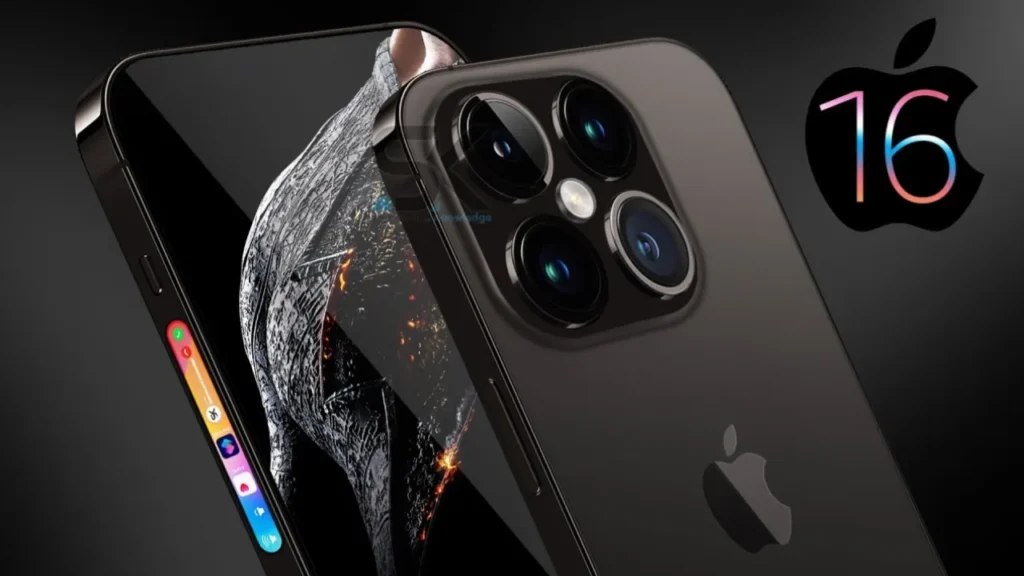
The iPhone 16 is the next major flagship from Apple, expected to build on the success of the iPhone 15 series by introducing several upgrades in design, hardware, camera, battery and connectivity. Apple aims to deliver a refined user experience, stronger ecosystem integration, and cutting-edge features that maintain its leadership in the premium smartphone space.
iPhone 16
iPhone 16 Design and Display
Apple is likely to retain the premium surgical-grade stainless steel or aerospace-grade aluminum frame with glass backs, but introduce thinner bezels and possibly a slightly lighter body. The display is expected to be a 6.7-inch (for Pro models) or 6.1-inch (for base model) ProMotion OLED panel with 120Hz refresh rate and brightness upwards of 2000 nits. HDR10 and Dolby Vision support will remain, and the notch may be replaced or reduced further for a more immersive screen experience.
will presumably come equipped with the Apple A18 Bionic chip (or equivalent) built on a more advanced fabrication node (like 3nm), delivering higher CPU and GPU performance, better energy efficiency, and improved neural engine for AI/ML tasks. RAM may remain 8GB to 12GB for Pro models, and storage options may go up to 1TB. The optimized hardware-software integration will ensure seamless performance, smooth animations, and long-term reliability.
iPhone 16 Camera System
Apple tends to keep its camera hardware refined and introduce improvements each year. For iPhone 16, we expect a triple-camera setup on Pro models: a 48MP primary sensor with improved optics and OIS, a 12MP ultra-wide, and a new 48MP telephoto offering higher optical zoom (maybe 5x or 10x). Features may include improved night mode, portrait mode with better depth estimation, ProRAW enhancements, and 8K video recording with better stabilization and log capture for professionals. The base models may carry a dual-camera system with a bump in sensor size and dynamic range.
Battery life is likely to be improved through efficiency gains in the A18 chip and possibly a larger battery capacity for Pro models. Wired charging may support up to 30W or higher, and wireless charging could move to 15W or more. There are rumours of the iPhone 16 Pro supporting reverse wireless charging (share your charge with other devices) and enhanced MagSafe accessories with higher power delivery.
iPhone 16 Software and Ecosystem Features
iPhone 16 will ship with iOS 19 (or next version) bringing new features like smarter widgets, AI-driven personal assistant improvements, better privacy controls, cross-platform enhancements (Mac, iPad, Apple Watch). Additional features may include satellite connectivity enhancements, refined Face ID under-display sensor, and deeper integration with the Apple ecosystem. Apple may also focus on sustainability, repairability and longevity with software updates expected up to six to seven years.
iPhone 16 Price in India
In India, the iPhone 16 base model is expected to start at around ₹89,900 to ₹1,00,000 depending on variant and local taxes. The Pro models may be priced from ₹1,30,000 onwards. Early launch offers, trade-in deals and bank discounts could bring promotional pricing.
iPhone 16 Pros and Cons
Pros: Seamless Apple ecosystem integration Top-tier performance and software support Premium camera system with future-proof features Strong resale value
Cons: Very high entry price Fewer customization options compared to Android Base model may lack some Pro features
iPhone 16 Launch Date in India
The global launch of iPhone 16 is expected in September 2025, with India launch following shortly thereafter—typically within a week. Apple will likely host its annual “Far Out” or equivalent event to unveil the new iPhones and other accessories.